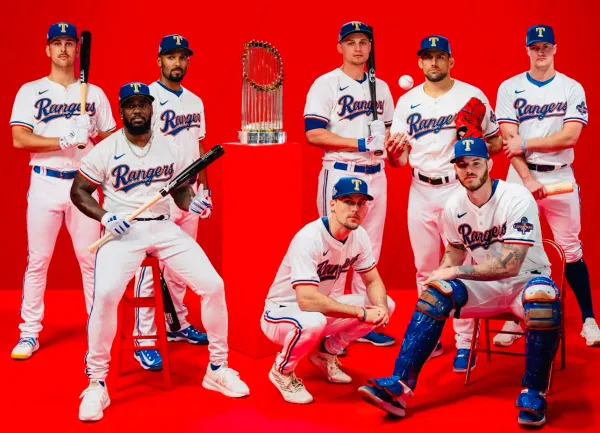
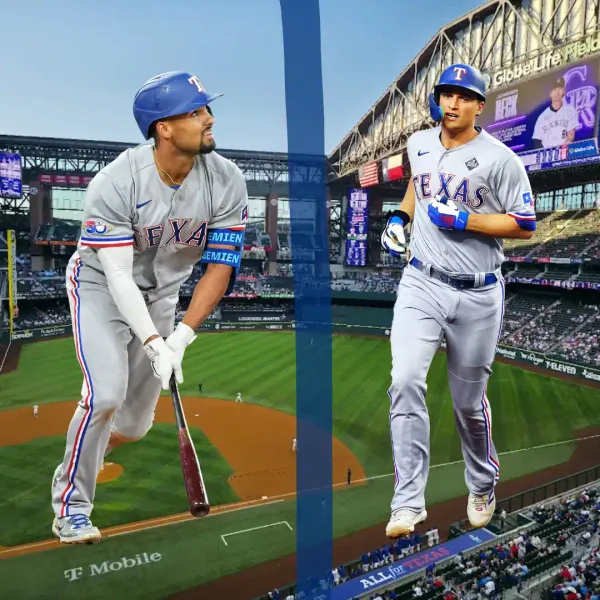
Tension Brewing in the Rangers Clubhouse: Did the Semien-Seager Rift Drag Down the Team, and What’s Next Without Semien?

The Texas Rangers’ decision to trade Marcus Semien to the Mets for Brandon Nimmo just before Thanksgiving 2025 sent shockwaves through the fanbase. Coming off a disappointing .500 season marred by injuries and inconsistency, the move wasn’t just about swapping a struggling second baseman for an outfielder—it may have been an attempt to quietly resolve simmering clubhouse tension, particularly between Semien and Corey Seager. MLB insider Jon Heyman, speaking on Bleacher Report Live, described it as a “clubhouse thing” with “a little bit of a conflict,” hinting at deeper issues that could have rippled through the entire team and contributed to their underwhelming 2025 campaign.
At the heart of the rumored rift were two contrasting leadership styles from the stars who anchored the 2023 World Series-winning infield. Corey Seager, signed to a 10-year, $325 million deal before the 2022 season, has always been the archetype of quiet professionalism. Rangers fans and front office knew exactly what they were getting: a stoic, routine-obsessed hitter who leads by example on the field. His resume—multiple All-Star nods, Silver Sluggers, and two World Series MVPs with the Dodgers—speaks volumes. Even in an injury-plagued 2025 where he played just 102 games, Seager delivered elite production with a 138 wRC+ and .278/.353/.483 slash line when healthy. His independent approach, focusing on personal preparation over group motivation, has proven effective in winning environments, but it doesn’t always mesh with more extroverted teammates.
Marcus Semien, on the other hand, brought a high-energy, vocal presence to the clubhouse. Known for his durability (playing all 162 games in multiple seasons) and Gold Glove defense, Semien actively tried to foster team unity during 2025’s rough patches. As reported by DLLS Rangers insider Jeff Wilson, Semien organized several team get-togethers, but attendance was disappointingly low—often just a handful of players showed up. His efforts stemmed from a genuine desire to rebuild the camaraderie that fueled the 2023 title, but they highlighted a philosophical divide: Semien’s push for collective bonding versus Seager’s preference for individual focus. Tensions reportedly peaked late in the season, with an alleged remark from Semien to Seager about “talking a lot for someone who only played around 30 games,” underscoring frustration over injuries and perceived uneven contributions.
This potential rift didn’t exist in a vacuum—it likely affected the entire clubhouse, amplifying the team’s struggles. Former Ranger Kevin Pillar, upon retiring in July 2025, alluded to “a lot of individual stuff going on” and players “doing their own thing” on The Foul Territory Show. In a season where key players like Seager, Semien, and Joc Pederson were sidelined for extended periods, a fractured locker room could have eroded morale and cohesion. Without strong, unified leadership, younger players like Evan Carter or Wyatt Langford might have felt directionless, while veterans like Nathan Eovaldi or Max Scherzer focused more on their own recoveries than team-wide motivation. The result? A lack of that intangible “spark” that turns talented rosters into contenders. Off-field dynamics exacerbated this: Wilson noted the Rangers rarely hung out together away from the ballpark, and an unusually high number of players had wives or families traveling with them regularly. In the grind of a 162-game schedule, this family-centric setup—while understandable—can subtly prioritize personal life over the raw, unfiltered bonding that builds unbreakable team chemistry, like late-night dinners or downtime where players vent and connect without external influences.
The rift’s broader impact might explain why a team with World Series pedigree fizzled in 2025. Injuries were the headline, but underlying tension could have turned minor slumps into prolonged funks, fostering an every-man-for-himself mentality that Pillar described. It’s no coincidence that attendance at Semien’s events was sparse; if core leaders like Seager weren’t fully bought in, it sent a signal to the rest of the roster that unity was optional. This discord, even if subtle, likely contributed to the Rangers’ inability to rally, finishing well out of playoff contention despite flashes of talent.
Now, with Semien gone, how might this shift affect clubhouse chemistry in 2026? The Rangers have made several offseason moves, adding a mix of vocal and quieter personalities that could either stabilize or further complicate dynamics. On the vocal side, Brandon Nimmo brings infectious energy from his Mets days—known for his positivity, hustle, and ability to rally teammates with his upbeat demeanor. Reliever Alexis Díaz, acquired in a separate deal, adds a fiery, competitive edge as a young closer with big-game potential, echoing his brother Edwin’s charisma. Veteran reliever Chris Martin, re-signed for stability, offers steady, vocal guidance from the bullpen. These additions could fill the leadership void left by Semien, providing a more balanced vocal presence that complements Seager’s quiet style without clashing.
However, the team has also brought in quieter types, like catcher Danny Jansen, who’s more of a professional grinder focused on his craft than a clubhouse motivator. If the clubhouse skews too quiet, the Rangers risk losing Semien’s relentless energy, which pushed for accountability and togetherness. Without that spark, the team might become overly introspective, especially if injuries persist, leading to a flat, uninspired group. On the flip side, this could be a net positive: Removing the tension allows Seager to thrive in his natural element, while new voices like Nimmo’s inject fresh positivity. A refreshed locker room, free from brewing resentments, might foster organic bonds—perhaps encouraging more off-field hangouts without the forced feel of Semien’s initiatives.
Ultimately, the Semien trade signals a roster reset, but its success hinges on chemistry. If the mix of vocal newcomers energizes the quieter core, the Rangers could rebound stronger, leveraging Seager’s proven production in a harmonious environment. But if Semien’s absence leaves a void in motivation, the team might struggle to find that championship grit. Rangers fans, as we head into 2026, is this the fresh start we need, or a risky gamble? Time—and the clubhouse—will tell
Written by
What's Next?

Revisiting the Merrill Kelly trade after re-signing with Arizona
Several days have passed since Merrill Kelly re-signed with the Arizona Diamondbacks. $40 million will be heading Kelly's way over two years after a short stint with the Texas Rangers. Many were upset with Chris Young for not getting Kelly back on the 2026 roster, even if the signs were right in our face moments after the trade was made. Both Kelly and Arizona general manager Mike Hazen made public comments about a possible reunion back around the deadline. Kelly confirmed the idea was present