

The 2026 MLB Draft is now upon us, with rounds 1-4 taking place tomorrow afternoon. This is my favorite time of the year, and with it comes the inevitable questions of who will the Rangers select with their draft picks. Plenty of publications have done 1st round mock drafts ad nauseam, so I wanted to look past that and think about rounds 2-4.
I based my choices mainly off of what I believe the Rangers look for from both a body type standpoint, as well as from a pitching philosophy perspective. Every organization has specific traits they look for in pitchers, and for the Rangers specifically, I prioritized 3 things: fastball shape/approach angles, ability to stick as a starter, and feel for the strike zone. With that in mind, these are the 4 arms that I believe could and should be in play for the Rangers in any of their Day 1 selections:
Hunter Dietz, LHP, Arkansas
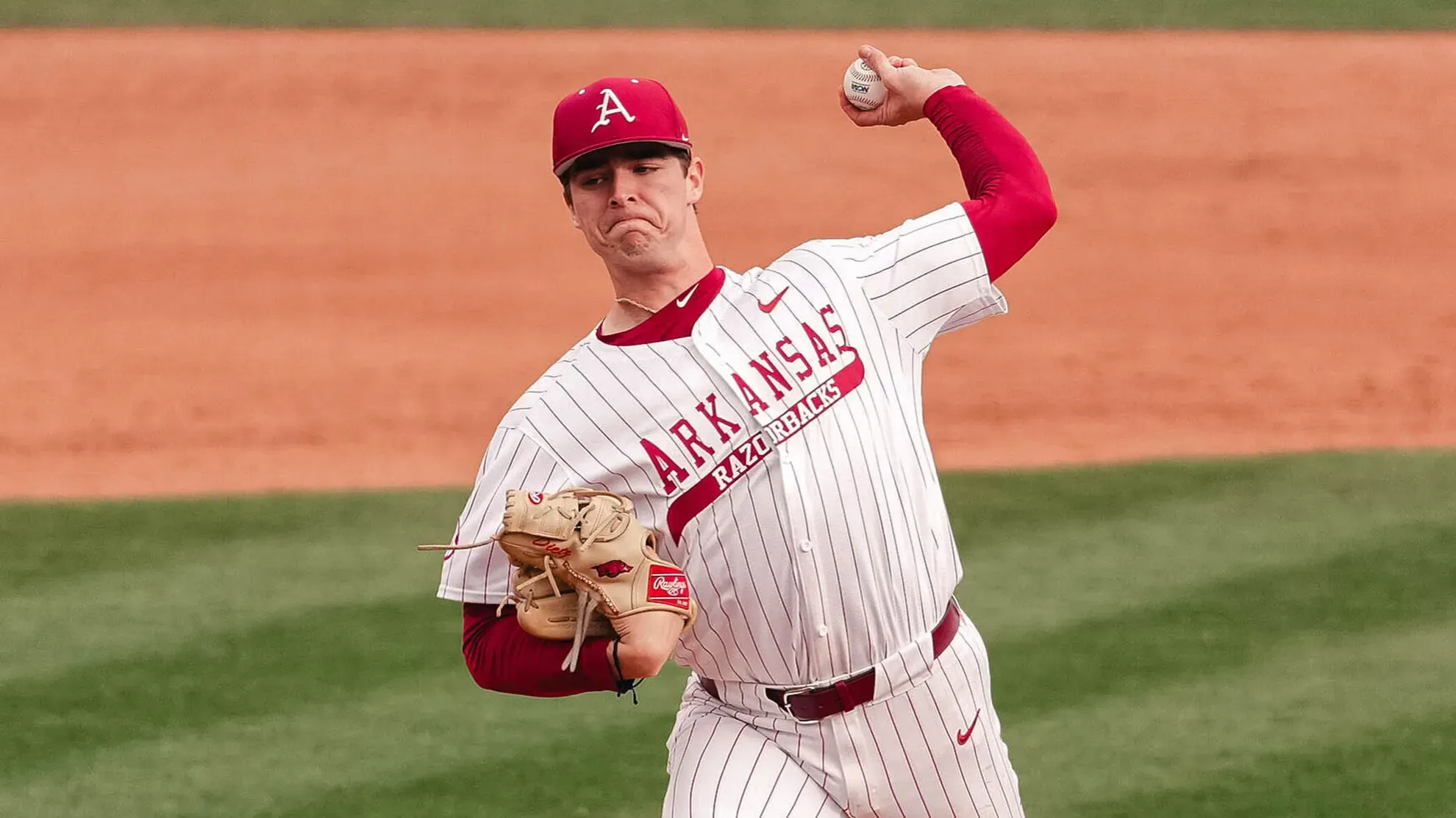
Okay this one is more of a pipe dream, since there’s a strong likelihood that Dietz is off the board by the time the Rangers pick in the second round. Dietz is a high-slot lefty that generates a ton of ground balls, in large part to both the steep approach angle of his four-seam fastball, as well as his gyro slider which has an approach angle around -8 degrees. Dietz also has a curveball which is nothing more than average at the moment. The vertical break separation off his fastball is impressive, but he doesn’t throw it particularly hard and has struggled landing it for strikes.
Dietz was primarily a two-pitch pitcher his last season at Arkansas, but that was more due to the case that he was so successful with his fastball/slider combo that he never really had a reason to try and refine any other offering. Dietz mirrors a lot of what I believe the Rangers like to see in lefties. Large frame at 6’6”, high-slot release, strong fastball with a good capacity for spinning the baseball, and really strong command. There seems to be a lot of room to project a bit more with Dietz’s mix. The first order of business will likely be figuring out the changeup, but I would imagine at least a cutter and maybe a sinker could be strong additions to Dietz’s mix down the line.
He’s drawn some comps to Jordan Montgomery, and I can see it especially with the high slot and groundball focus. As I said, Dietz is more than likely off the board by the time the Rangers pick in the second round, but there’s a lot to like about the past, present, and future of what Dietz has to offer an organization.
Ben Blair, RHP, Liberty
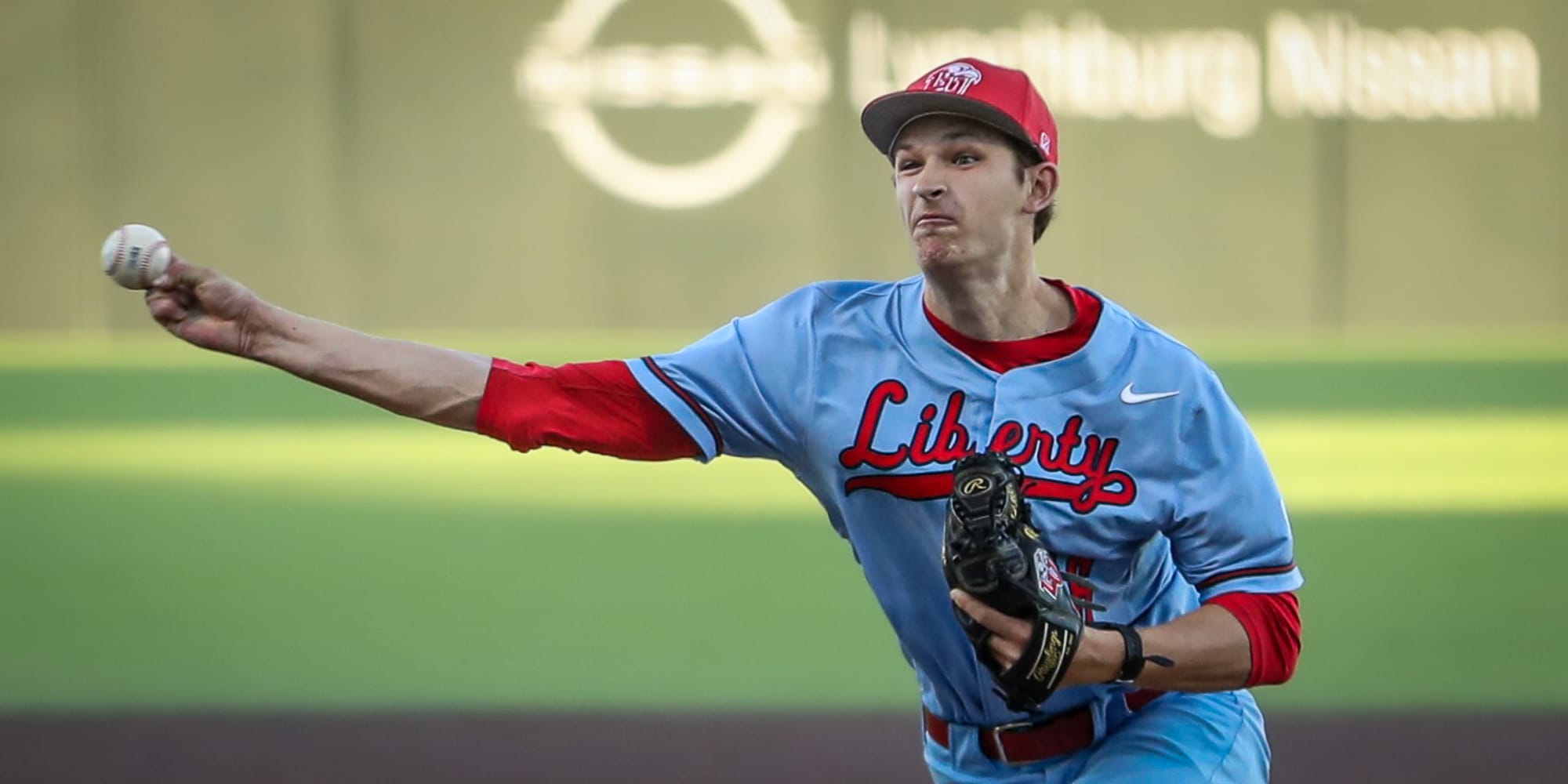
If you were to build a prototypical Rangers right-handed arm, it would be Ben Blair. He’s everything the Rangers love, big enough frame at 6’3”, huge extension at almost 7’, low release height, two-planed fastball shape with a super flat approach angle, a good breaking ball shape, and great command. Blair’s mix is completely centered around the fastball. It sits mid-90s wth big arm-side run. There are admittedly some odd things to note about Blair. Firstly, despite the impressive shape, Blair did struggle generating some swing and miss on his fastball. However, that can more be attributed to where he was throwing his fastball, as when he would throw it at the top of the zone is when he gets that super elite -3.9 degrees.
To be blunt about Blair, his cutter is weird. It gets more lift than his fastball and does not generate any glove-side movement. It worked for him in college, but it’s something I imagine the team that drafts him will want to tinker with. He’s got a good sweeper shape that averages about 14” of glove-side break and sits in the low-80’s. I would love to see Blair in the Rangers farm system, because I feel like there’s a lot of potential to be unlocked here. He’s got the traits to be able to add a better cutter and changeup, and there’s also some mechanical tweaks that can help Blair cut the ball more and likely get less lift on his cutter.
I can admit this is definitely more of a draft sweetheart style inclusion from me, but Ben Blair has the exact type of profile that I think just fits perfectly in the Rangers system, and would add on to an already blossoming core of young starting pitching prospects.
Cade Townsend, RHP, Ole Miss
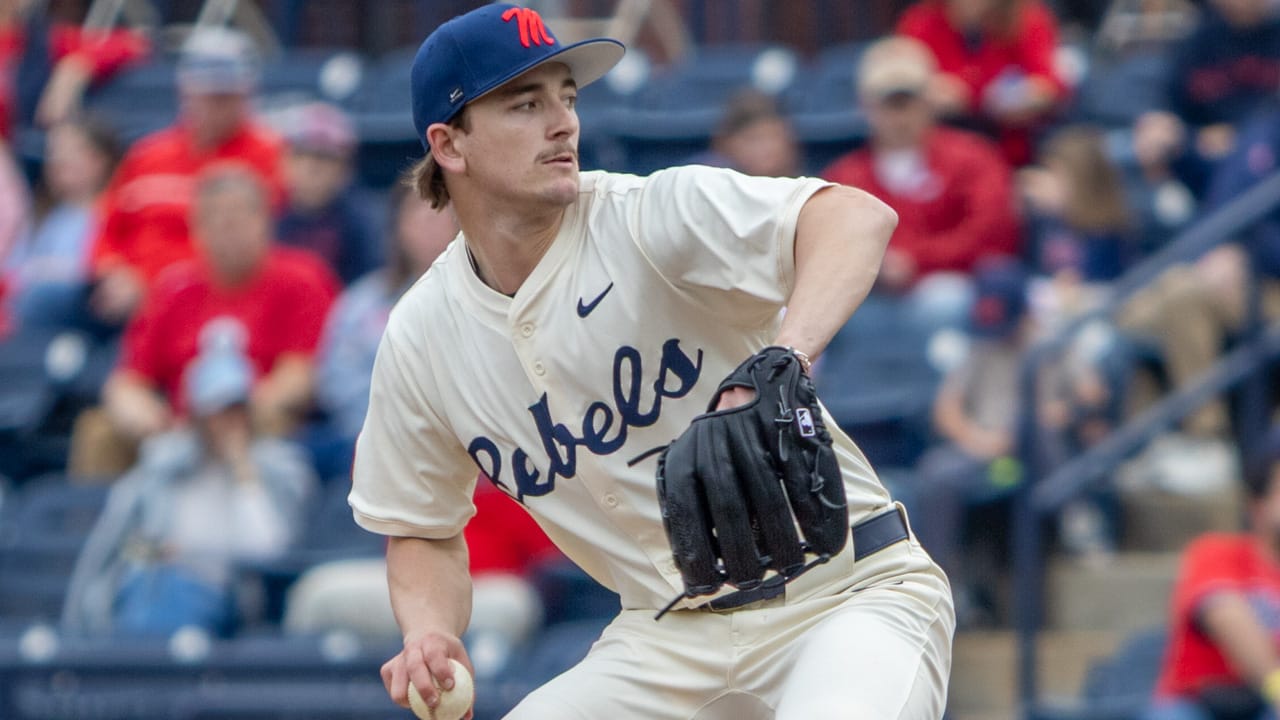
Cade Townsend is probably the biggest sleeper of the 4 mentioned here. General consensus isn’t as high on him like a Dietz, but I think there’s a lot to like here. He has a decent frame at 6’1”, and he holds his velocity very well in his breaking ball shapes. He’s got a big mix, but once he settles into pro ball I think his mix will settle into a four-seam, cutter, sweeper, curveball, and changeup. He averages 90 on his cutter and throws it about 43% of the time. The shape only grades out as average or slightly above, but he’s done a really good job getting swing and miss with it. It has a better than average approach angle and he zones it quite frequently.
That’s honestly the theme around Townsend, he throws a lot of strikes. He had a strike% of 65% this past season and lowered his walk rate from 13% last year to 8% in 2026. His fastball shape is admittedly projects to just above average, but his velocity should really help carry the shape to be viable in pro ball. He’s a really good candidate to add a sinker as well. There are probably better landing spots for Townsend than the Rangers, but I am a big fan of his profile and if he slips to the 2nd round I think there is serious discussion to be had about him.
Townsend might not have the box office draw that a Jackson Flora or a Liam Peterson bring, but I just personally think you can never have enough big mix righties who have shown a good feel for the strike zone.
Ryan Peterson, RHP, Sam Houston State
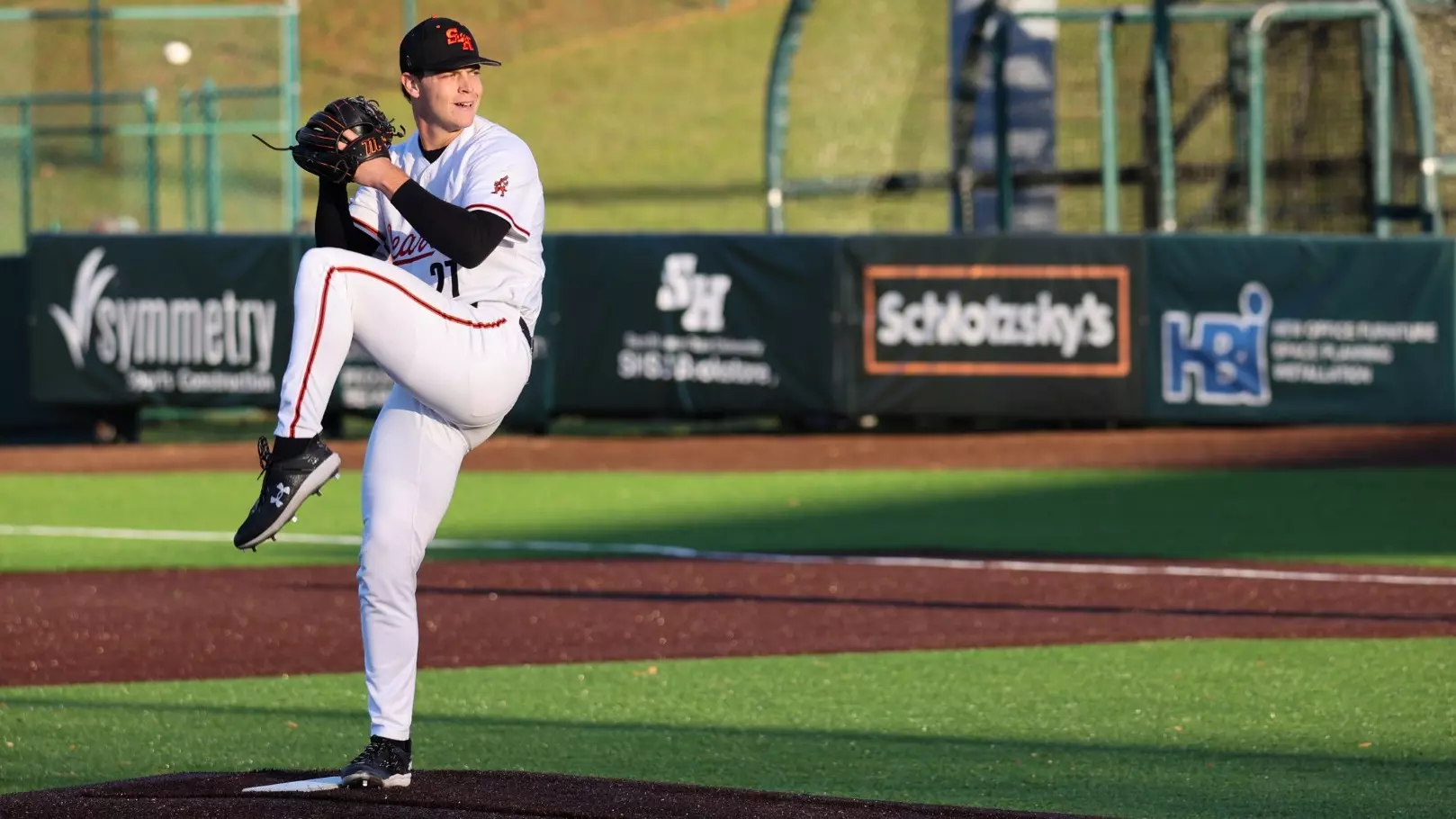
I saved the best for last, and by “the best,” I mean my personal favorite. Ryan Peterson probably has the best traits of everyone listed here. He has a 6’3” frame with a 5’2” release height. He gets to 6.7’ of extension, and has a great fastball with a -4.1 degree approach angle. Although the most impressive trait Peterson possesses is his spin capacity. He spins his mid-80s slider around 2,900 rpm and averages above 3,000 on his low-80s curveball. He’s also got a big mix, as in addition to those three he also throws a sinker, cutter, and changeup.
Despite some really strong metrics, the results didn’t always back that up for Peterson. He did have a 3.38 ERA in 88 innings for Sam Houston State this year, but he only sits about 92-93 on his fastball and doesn’t get a ton of in-zone miss on it despite the flat approach angle. Looking at his mechanics, I actually like a lot about it. I like the way he sets up his delivery and I think he’s got a very smooth arm path. What stands out to me is Peterson seems to open up his hips too early and drift towards the first base side a bit too much. It’s nothing that can’t be fixed, but there’s definitely more work to be done with Peterson compared to other top pitching prospects.
Much of the allure with Peterson for me comes from what I think he could be, and he would be in consideration for me as early as the 3rd round, but I think a more realistic landing spot for him is in the 4th round.